Section 5 – Practice
For this final section, your project is to imagine and analyze possible futures with AI, and to clearly state the rules and values you think should guide those futures.
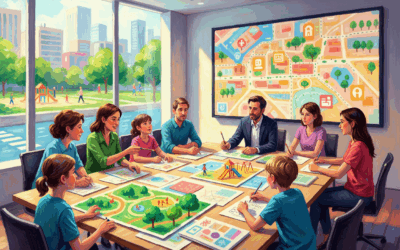
Choose one area of life that matters to you, such as school, health, work, the environment, or cities. On a large sheet of paper, divide the page vertically into two halves. On the left side, draw or describe a positive future scene in which AI is used in that area to make life better, safer, or fairer. On the right side, draw or describe a more worrying future scene where AI has created new problems or made old problems worse. Under each scene, write a few sentences explaining who is helped, who might be harmed, and what role AI is playing.
After creating your two scenes, write a one- to two-page reflection titled “My Future with AI.” In it, explain why both of your futures could be possible, depending on how people design and use AI. Then make a numbered list of at least five rules or principles you think should guide AI in your chosen area. These rules might include ideas like “AI systems must be tested for fairness on many different groups,” “People must always know when AI is making or helping with a decision,” “Humans must have the final say in serious health or safety situations,” or “AI should protect privacy and not collect more data than necessary.” For each rule, add a short explanation of why you chose it and how it would push the world toward your positive scene and away from your worrying one.
If you have access to Scratch, you can build a tiny interactive story that shows a character moving between your two futures. Use: https://scratch.mit.edu/
Create a backdrop for the positive future and another for the worrying future. Let the player choose actions or rules for the character (for example, “use AI without checking fairness” or “test AI for bias first”), and switch backdrops depending on the choices. This will help you think through how everyday decisions lead toward one future or another.
If you have access to Python and basic data tools (for example in a Jupyter environment or on Replit: https://replit.com/), you can explore one real dataset connected to your area, such as air quality, energy use, or internet access. Write a short script to load and graph the data over time. Then add a short caption explaining how AI might help improve the situation if used carefully—or how it might amplify problems if used without good rules.
If you have access to Hackidemia’s text-to-speech tools, you can turn your rules into a short audio message. Go to: https://hackidemia.com/
Paste your five or more rules into a text-to-speech activity and listen to them as if you are hearing a “future manifesto.” If you are able to combine audio and images (for example in a simple video editor), you can overlay this audio on top of pictures of your two future scenes and share the result as a mini “Future with AI” presentation.