
Yekamaka

Structured Heat

Collection: 607’s Art An abstract geometric painting built from a precise grid of rectangles and squares in bold, high-contrast colors. Blocks of vivid orange and deep red are stacked against solid black and cool grey, creating a sense of heat and energy contained inside a strict, logical framework. Thin lines and subtle subdivisions hint at…

Read More

Quiet Glow

Collection: Peeko’s Collection An abstract oil painting in soft, creamy beiges and gentle greys, designed to feel like a quiet breath in the middle of the day. Broad, smooth areas of light color are crossed by delicate lines and subtle, block-like shapes, as if walls, windows, and distant buildings were dissolving into a soft haze….

Read More

Wonderful Nature

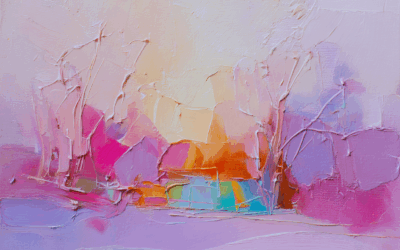
Collection: Maria’s Art An abstract oil painting of a small, magical village embraced by nature, painted in soft, joyful colors. Chunky, textured strokes shape tall trees that glow in shades of pink, coral, and warm orange, like leaves lit by a dreamy sunset. Beneath them, simple little houses in pastel pinks, lavender, and light turquoise…

Read More

Joyful Afternoon Together

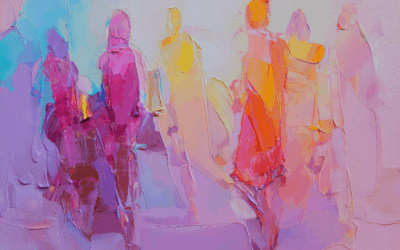
Collection: Maria’s Art An abstract oil painting of happy people gathered together, painted in thick, playful strokes of color. The figures are simplified into soft shapes, standing and moving side by side, their bodies suggested rather than fully outlined. Radiant pinks, warm corals, and glowing oranges dominate the scene, blended with touches of sunny yellow…

Read More

Sunrise Over Silent Peaks

Collection: Alex’s Art An abstract oil painting of a mountain range at the very first light of day, when the world is still quiet and the sun has just begun to rise. Tall peaks emerge from deep indigo and midnight-blue shadows, their faces built from thick, angular strokes of paint that suggest carved stone and…

Read More

First Light After the Storm

Collection: Alex’s Art An abstract oil painting of the ocean just after a powerful storm, when the sea is still wild but beginning to calm. Huge waves rise and curl in deep cobalt and ultramarine blues, their movement captured with thick, sweeping palette-knife strokes that show the last bursts of energy fading into rhythm. In…

Read More
Select Travel as Social‑Emotional School Travel as Social‑Emotional School

Travel as Social‑Emotional School

Travel is often sold as “seeing new places.” For children, it’s also intensive training in: Research in Kid‑Friendly World describes travel as a socialization engine: children practice independence (small responsibilities), empathy (meeting different people), and resilience (plans changing, flights delayed, food unfamiliar). A family trip is not just a break from real life; it’s a…

Read More
Culture Changes How We Define a “Good Child”

Culture Changes How We Define a “Good Child”

Ideas about “good behavior,” respect, and independence are not universal. They are cultural. Cross‑cultural research summarized in Kids and Parents and Kid‑Friendly World shows: A “well‑behaved” child in one culture might look “too quiet” or “too bold” in another. For global cities, schools, and tourism destinations, this means: Science can tell us how brains develop….

Read More
Modern Parenting Is Loud, Fast, and Opinion‑Heavy

Modern Parenting Is Loud, Fast, and Opinion‑Heavy

Today’s parents navigate a historically unusual environment: This “noise” shapes how adults experience their children. Many parents are not actually failing. They are trying to parent in an environment that treats parenting as a performance, not a relationship. Research described in Kids and Parents links this climate to parental burnout: emotional exhaustion, detachment, and a…

Read More
Why Children Are the Best (and Most Honest) Urban Planners

Why Children Are the Best (and Most Honest) Urban Planners

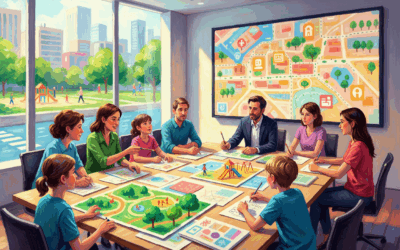
Children experience cities from a completely different height, speed, and sensory angle. They notice: In participatory design projects, children routinely: Children are not “future citizens.” They are current experts on what it feels like to move a small, vulnerable body through our systems. Research on participatory planning shows that when children co‑design parks, streets, and…

Read More